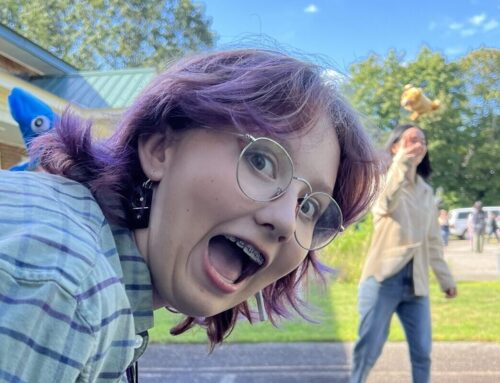
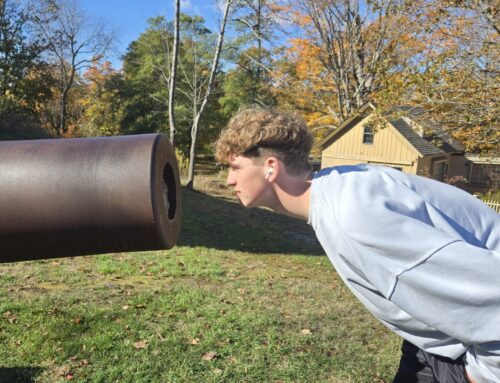
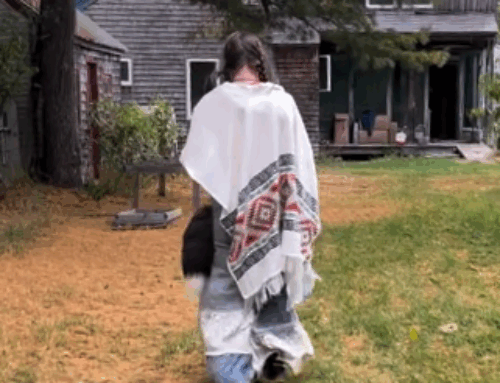
Our Spring Semester has gotten off to a snowy start with our student body heading as far out as Cambridge for off-campus learning opportunities. We have been to planetariums, museums, and city infrastructure locations over the first part of the calendar year, all the while planning and executing several community-facing events.
A quick recap of what we’ve been doing recently:
Jack and Ellie’s classes went up to Portland, spending time at the Maine Historical Society, for the “Maine Crime in the Public Eye” exhibition. The MHS invited us to experience “Maine’s fascination with true crime through history from early American printing to the dawn of photojournalism. Through fourteen case studies, explore media sensationalism, public consumption, and the social impact of high-profile Maine crimes.” After lunch, we visited the International Cryptozoology Museum over on Thompson’s Point. In our Wild Lore and Living Earth course, our students created their own cryptids based on actual animals. The cryptid designs our students made are based on real evolutionary concepts. We also used this to sneak in some learning about biomes, biology, and biodiversity over our semester-long project.

 Ellie and Jack took our students to the Gilsland Farm Audubon Center in Falmouth, where the students explored their environmental education center and the 65-acre sanctuary (with more than two miles of trails winding along a pond and through forest, meadow, orchard, and salt marsh). Part of the trip centered on wildlife-watching. The center is a great place to spot Canada Geese as they forage in the meadows, and is a hunting ground for Red-tailed Hawks and other birds of prey.
Four of our juniors and seniors joined the Workplace Readiness Bootcamp during our advisory period. This program, led by Goodwill Northern New England and the Maine Division of Vocational Rehabilitation, is designed to help students gain valuable skills for finding and keeping a job and runs through the entire school year. As part of this program, students will explore career options, build resumes, practice job skills, and prepare for life after school. This is a wonderful opportunity for our students to build confidence and skills that will serve them well beyond the classroom. They will also receive credit towards graduation requirements.
We spent some time with the Kennebunkport Historical Society at their White Columns building, a Victorian-era home owned by the Perkins-Nott family for 130 years. The building on Maine Street contains the home’s original furnishings. Our students went on a tour of the home, learning about the later part of 19th Century Kennebunkport including tales of shipbuilding and the town’s maritime history.

Math teacher Paul Beach organized a trip to take the class to two of the buildings that house the Kennebunk, Kennebunkport & Wells Water District: the historic Porter House on Kennebunk’s Main Street, which serves as the headquarters for the Water District, and the Filtration Center on Rt. 1 between Wells and Kennebunk. Bill Snyder, the Filtration Center Manager, guided us around and told us how the Water District prepares and delivers water all throughout the neighboring towns.

Mid-January, about four dozen people attended our first semester LEAP Night celebration! During the event, we paired at least two members of the greater TNS community with a student, giving the student an opportunity to showcase and explain their learning over the past half year of school. This year, we had several teams with three feedback members! This showcase of learning is our school’s equivalent of final exams; it’s an event where our students practice public speaking skills, engage in discussions, and teach them how to present material to a diverse audience.


We went to the Harvard Museum of Natural History, where we spent time studying fossils as part of our “The Age of Dinosaurs: Life in the Mesozoic” class. This course is being taught by current senior Phoenix, as part of their senior project, another excellent example of the kind of student-led, student-facing curriculum that defines learning at The New School.
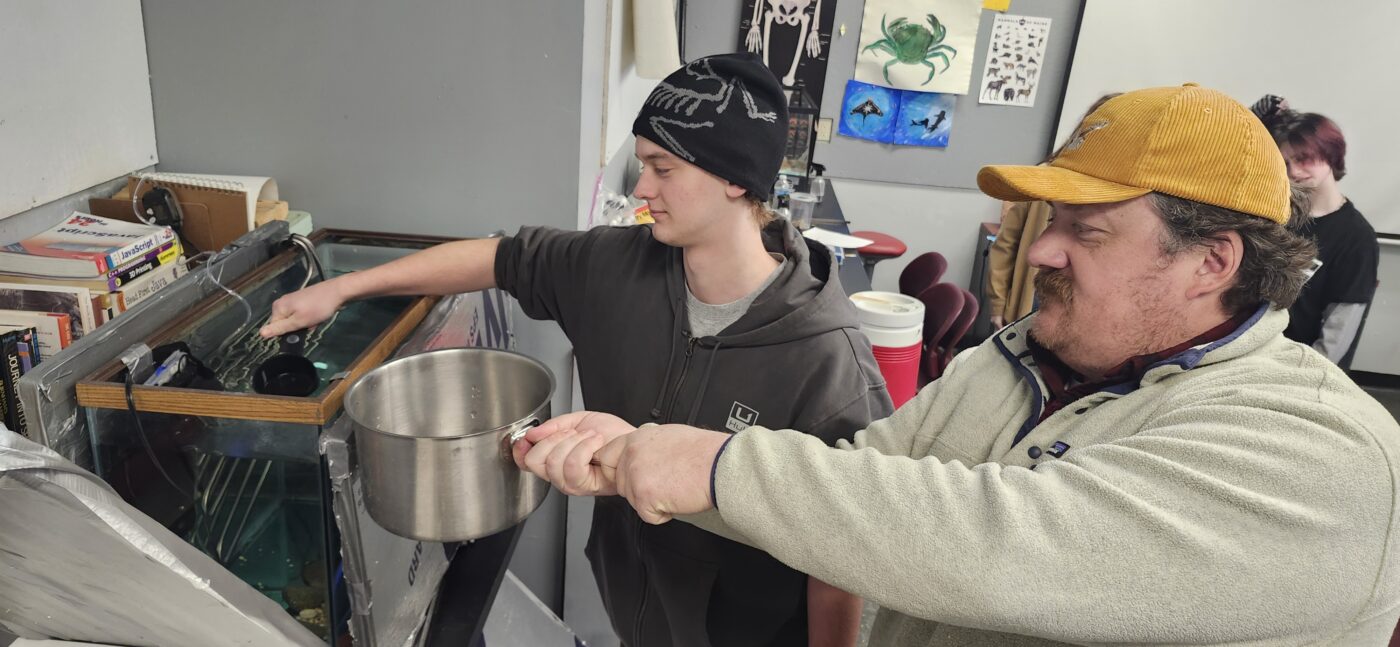
We are in the middle of another round of salmon fostering. Due to dams, poor water quality and disease, Atlantic salmon are considered endangered. Their breeding range in the United States is almost, if not entirely in Maine. This is the school’s third year of fostering salmon, which started in the 22-23 school year as a senior project. That senior, alum Alex Morin, was by recently to help get us set up and provided guidance to this year’s students for the project. In Alex’s first year with the salmon, Alex and the school’s Watersheds and Ecology class successfully released 193 fry of the 200 eggs we received. Alex’s 96.5% survival rate far exceeds the single-digit hatchery survival rate.
Students in our Cold War history class headed to The Escape Room in Portland to take part in the “World on Edge” room. “Tensions between the world’s two superpowers continue to grow. A rogue KGB agent has infiltrated the submarine Stalinsky, hellbent on starting World War III. Can you stop the rogue KGB agent and save the world!?”
 We held Bowls of Hope in March, with dozens of people supporting the school and supping on soups. Food was provided by local restaurants and bakeries, including 50 Local, Bandaloop, Borealis Breads, Boulangerie: A Proper Bakery, Crotux Kitchen & Taphouse, Duffy’s Tavern & Grill, Federal Jack’s, Kitchen Chicks Catering, and KPort Provisions. Our students and faculty had been spending time creating dozens of hand-crafted bowls for the event. Overall, we brought in more than $1500 to help support the school and Kennebunk’s Community Outreach Services.
Our students journeyed to the University of Southern Maine’s Portland campus later that month. At the Southworth Planetarium, we took in the Threats From Space show. The planetarium’s site writes: “The night sky may appear calm and peaceful, but look closer and you will discover space is fraught with many dangers! Asteroids, comets, supernovae, wandering black holes could all have disastrous consequences for the Earth. What are the probabilities of such events? Has such a catastrophe ever occurred? Could it happen again?”